🌍 Emerging Risks: Cybercrime, Climate Change, and More
The world is changing rapidly, and so are the risks faced by individuals, businesses, and communities. Traditional risks such as fire, theft, and accidents still exist, but new threats are emerging every year.
Insurance companies continuously study these changing risks to develop products that provide protection against modern challenges.
Three major emerging risks today are:
Cybercrime
Climate Change
Other Evolving Risks
Understanding these risks can help individuals and businesses prepare for the future.
💻 Cybercrime – Criminal Activity Online
As more people use the internet for banking, shopping, communication, and business, cybercrime has become a major concern.
Cybercriminals use technology to steal information, money, or disrupt operations.
Common Examples
Hacking
Identity theft
Online fraud
Ransomware attacks
Data breaches
Phishing emails
Example
A small business stores customer information online.
A hacker gains unauthorized access and steals sensitive data.
The business may face financial losses, legal costs, and reputational damage.
Why It Matters
Cyber incidents can affect:
Individuals
Small businesses
Large corporations
Government organizations
Cyber insurance is becoming increasingly important as digital risks continue to grow.
🌡️ Climate Change – Rising Global Temperatures
Climate change is contributing to more frequent and severe weather events across the world.
Insurers are seeing increased claims related to natural disasters.
Examples
Floods
Cyclones
Heatwaves
Droughts
Wildfires
Severe storms
Example
A coastal city experiences repeated flooding due to extreme rainfall.
Property damage claims increase significantly, affecting homeowners, businesses, and insurers.
Why It Matters
Climate-related risks can impact:
Homes
Vehicles
Crops
Businesses
Infrastructure
Insurance companies use advanced risk models to understand and manage these growing challenges.
⚠️ Other Emerging Risks
Many new risks continue to develop as society and technology evolve.
Examples
Artificial intelligence-related risks
Supply chain disruptions
Pandemic-related events
Critical infrastructure failures
Social engineering fraud
New business and technology risks
Example
A company depends on a global supplier network.
Unexpected disruptions can delay production and result in financial losses.
As businesses become more interconnected, these risks become increasingly important.
Why It Matters
New risks often develop faster than traditional insurance products, requiring insurers to adapt and innovate.
🌍 Real-World Impact
Emerging risks affect everyone.
Individuals
May face cyber fraud, identity theft, or climate-related property damage.
Businesses
May experience cyberattacks, operational disruptions, or supply chain failures.
Insurers
Must develop new products and pricing models to address changing risk patterns.
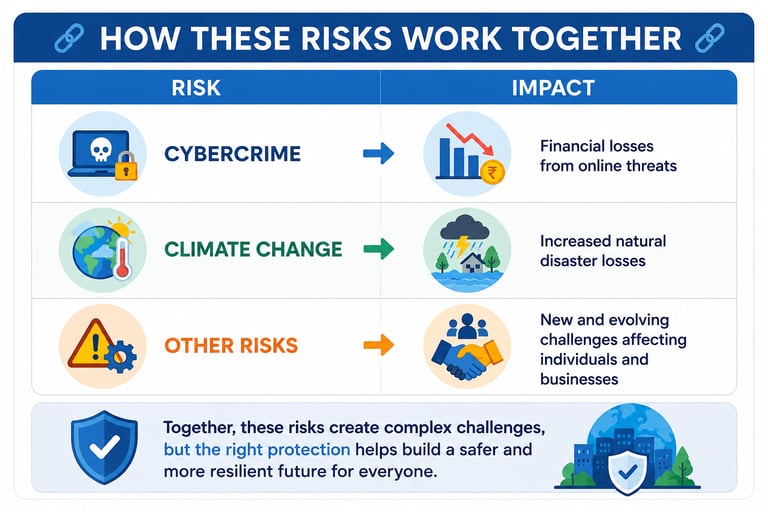
🔗 How These Risks Work Together
Together, these risks are reshaping how insurance companies assess and manage future uncertainties.
👨💼 Why Insurance Advisors Should Understand Emerging Risks
Understanding modern risks helps advisors:
✅ Educate customers effectively
✅ Recommend appropriate coverage
✅ Explain changing insurance needs
✅ Build long-term customer trust
✅ Stay relevant in a rapidly changing industry
Insurance is no longer just about traditional risks—it is also about protecting against the challenges of the digital and connected world.
💬 Advisor Script Suggestion
"Today's risks are different from those of the past. Cybercrime, climate-related events, and new business challenges can create significant financial losses. Insurance helps individuals and businesses prepare for these evolving risks."
Simple and easy to understand. ✅
🎯 Key Takeaways
Emerging risks are becoming more important every year.
Cybercrime can cause serious financial and data-related losses.
Climate change is increasing the frequency and severity of natural disasters.
New technologies and global connections create additional risks.
Insurance companies continuously adapt to address changing threats.
Understanding emerging risks helps people make better protection decisions.
The future will bring new opportunities as well as new challenges.
By understanding emerging risks and preparing for them early, individuals and businesses can build greater resilience and financial security.