Factors Affecting Claim Ratio in General Insurance: A Simple Guide for Policyholders and Advisors.
Learn the key factors that influence claim ratios in general insurance, including accidents, natural disasters, inflation, underwriting, fraud, and claims management. Understand what claim ratios really mean for customers and advisors.
GENERALMOTOR INSURANCE
Robin
6/22/20262 min read
When customers buy insurance, one of the first questions they ask is:
"Will my claim be paid?"
This is where claim ratios become important.
A claim ratio provides insight into how an insurance company is handling claims and managing risks. However, many policyholders and even some advisors do not fully understand what influences these numbers.
Let's explore the key factors that affect claim ratios in general insurance.
🛡️ What is a Claim Ratio?
A claim ratio compares the amount paid by an insurer as claims against the premium collected during a specific period.
A high claim ratio may indicate that the insurer is paying a large portion of its premium income as claims.
A low claim ratio may suggest fewer claims or better risk management.
The claim ratio helps insurers evaluate profitability and sustainability.
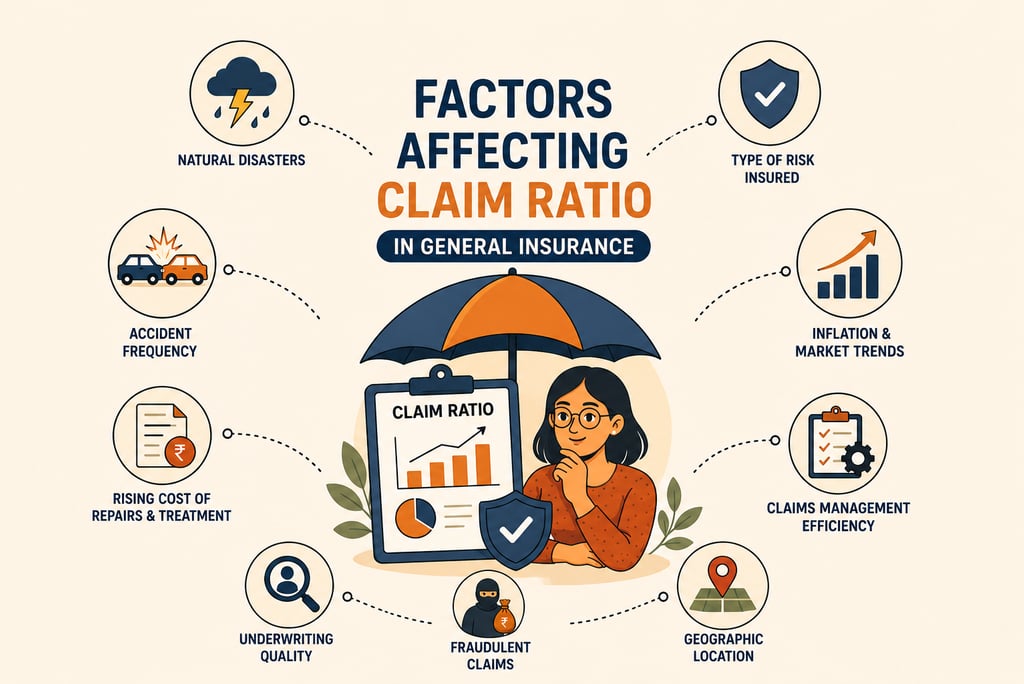
🚗 1. Type of Risk Insured
Different insurance products carry different levels of risk.
For example:
Health insurance generally experiences frequent claims.
Motor insurance sees regular accident-related claims.
Fire insurance may have fewer but larger claims.
Marine insurance depends on cargo and transit risks.
The nature of the risk directly affects claim frequency and claim amounts.
🌧️ 2. Natural Disasters and Catastrophic Events
Floods, cyclones, earthquakes, and other natural disasters can lead to a sudden increase in claims.
For example:
Heavy floods may damage thousands of vehicles.
Cyclones may affect homes, factories, and commercial properties.
During such events, claim ratios can rise significantly.
🚘 3. Increase in Accident Frequency
In motor insurance, claim ratios are influenced by:
Road conditions
Traffic density
Driver behavior
Vehicle usage
More accidents generally result in more claims and higher claim payouts.
🏥 4. Rising Cost of Repairs and Medical Treatment
Inflation affects insurance claims.
Examples include:
Higher vehicle repair costs
Expensive spare parts
Increased hospitalization expenses
Rising labour charges
Even if claim numbers remain the same, claim amounts may increase significantly.
📝 5. Underwriting Quality
Good underwriting helps insurers accept risks that fit their risk appetite.
Poor underwriting may lead to:
Higher claim frequency
Adverse selection
Increased losses
Insurers with strong underwriting practices often maintain healthier claim ratios.
⚠️ 6. Fraudulent Claims
Insurance fraud remains a major challenge.
Examples include:
Fake accidents
Inflated repair bills
Fabricated medical expenses
False property damage claims
Fraud increases claim costs and impacts overall claim ratios.
📍 7. Geographic Location
The location of the insured property or vehicle can affect claim experience.
Examples:
Flood-prone areas
Accident-prone roads
High-crime locations
Industrial zones with fire exposure
Higher risk locations often experience higher claim ratios.
🔄 8. Claims Management Efficiency
The speed and accuracy of claim handling also influence claim performance.
Efficient claims management can:
Detect fraud early
Reduce leakage
Improve customer satisfaction
Control claim costs
Modern insurers increasingly use technology and data analytics to improve claim handling.
🤝 Why This Matters for Insurance Advisors
Understanding claim ratios helps advisors:
✅ Recommend suitable insurers
✅ Explain premium differences
✅ Educate customers about risk factors
✅ Build credibility and trust
✅ Set realistic expectations regarding claims
Advisors should remember that a claim ratio alone does not determine whether an insurer is good or bad.
The context behind the numbers is equally important.
📈 What Customers Should Understand
A higher claim ratio is not always positive.
A lower claim ratio is not always negative.
Customers should also consider:
Claim settlement performance
Coverage offered
Customer service quality
Network garages or hospitals
Financial strength of the insurer
Insurance decisions should be based on a complete picture rather than a single statistic.
🎯 Key Takeaways
Claim ratio measures claims paid against premium earned.
Natural disasters, accidents, inflation, and fraud significantly impact claim ratios.
Good underwriting and efficient claims management help control losses.
Claim ratio is an important indicator but should not be viewed in isolation.
Advisors should help customers understand the story behind the numbers.
Final Thought
Claim ratios are like a health report for an insurance company. They provide useful insights, but they do not tell the entire story. A knowledgeable advisor understands the factors behind the numbers and helps customers make informed insurance decisions.