🌪️ How Insurance Companies Handle Catastrophic Losses
Natural disasters and large-scale events can cause thousands of insurance claims at the same time. Floods, earthquakes, cyclones, wildfires, and major industrial accidents can result in losses worth hundreds or even thousands of crores.
Yet insurance companies continue to pay claims and support policyholders during these difficult times.
How do they manage such massive financial challenges?
The answer lies in three important strategies:
Reserves
Reinsurance
Mitigation
Together, these tools help insurers remain financially strong even during major disasters.
💰 Reserves – Funds Set Aside for Future Claims
Insurance companies do not spend all the premiums they collect.
A portion of the money is kept aside as reserves to meet future claim obligations.
These reserves act as a financial safety cushion.
Example
If a flood damages hundreds of homes in a city, insurers can use their reserves to start settling claims immediately.
Why It Matters
Reserves help insurers:
Pay claims quickly
Maintain financial stability
Meet regulatory requirements
Handle unexpected losses
Without adequate reserves, insurers would struggle during large claim events.
🛡️ Reinsurance – Sharing the Risk
Even large insurance companies cannot carry every risk alone.
To manage very large exposures, insurers purchase reinsurance.
Reinsurance is often called:
"Insurance for Insurance Companies."
Under this arrangement, part of the risk is transferred to another insurer called a reinsurer.
Example
A cyclone causes damage worth hundreds of crores.
Instead of bearing the entire loss alone, the insurer shares part of the claim burden with the reinsurer.
Why It Matters
Reinsurance helps insurers:
Handle very large claims
Protect financial strength
Continue serving customers
Increase their claim-paying capacity
🔥 Mitigation – Reducing Losses Before They Happen
Mitigation means taking steps to reduce the likelihood or severity of losses.
Insurance companies actively encourage risk prevention.
Examples
Fire safety inspections
Building safety standards
Flood protection measures
Driver safety programs
Workplace risk assessments
The goal is simple: Prevent losses whenever possible.
Why It Matters
Mitigation helps:
Reduce claim frequency
Lower claim severity
Improve public safety
Protect lives and property
The best claim is often the one that never occurs.
🌍 Real-World Example
Imagine a severe cyclone strikes a coastal region.
Thousands of homes, vehicles, and businesses suffer damage.
Reserves
Insurers use reserve funds to begin claim payments.
Reinsurance
Part of the financial burden is shared with reinsurers.
Mitigation
Buildings constructed using stronger safety standards may suffer less damage.
Together, these measures help insurers respond effectively while remaining financially stable.
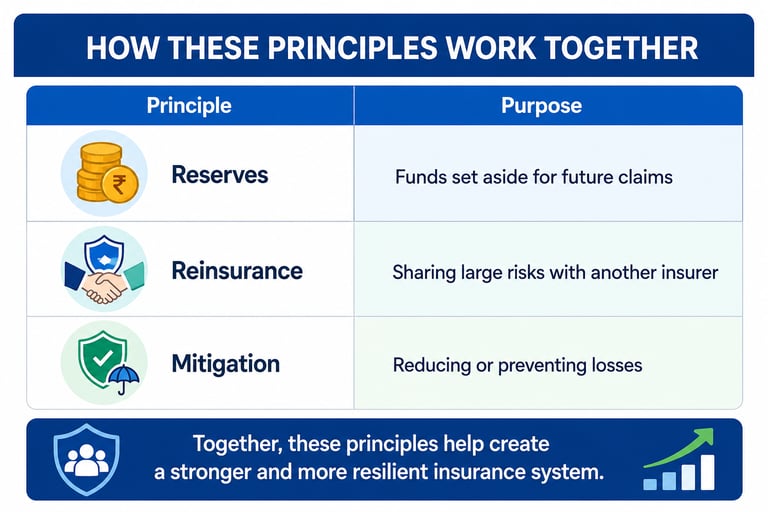
🔗 How These Principles Work Together
Together, these principles help create a stronger and more resilient insurance system.
👨💼 Why Insurance Advisors Should Understand This
Understanding catastrophic loss management helps advisors:
✅ Explain insurer financial strength
✅ Build customer confidence
✅ Answer questions about claim-paying ability
✅ Improve insurance awareness
Customers often wonder how insurers can pay thousands of claims after a disaster. These three mechanisms provide the answer.
💬 Advisor Script Suggestion
"Insurance companies prepare for large disasters by maintaining reserves, sharing risks through reinsurance, and promoting loss prevention measures. These strategies help ensure claims can be paid even during major catastrophic events."
Simple and reassuring. ✅
🎯 Key Takeaways
Catastrophic losses can generate thousands of claims simultaneously.
Reserves provide immediate financial support for claim payments.
Reinsurance helps insurers share large risks.
Mitigation focuses on preventing or reducing losses.
Together, these strategies strengthen the insurance industry.
A financially strong insurance system benefits both insurers and policyholders.
While most policyholders never see these mechanisms in action, reserves, reinsurance, and mitigation work quietly behind the scenes to ensure insurance companies can continue protecting customers when disasters strike.