🎯 How to Identify and Recommend the Right Insurance Coverage
One of the most important responsibilities of an insurance advisor is helping clients choose the right coverage.
Every client has different needs, financial goals, responsibilities, and risk exposures. A policy that is suitable for one person may not be suitable for another.
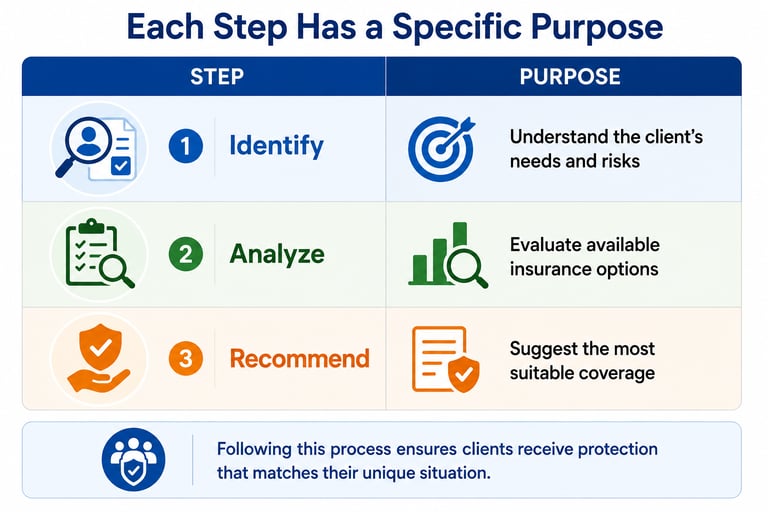
The best approach is to follow three simple steps:
Identify
Analyze
Recommend
This process helps advisors provide personalized solutions instead of generic policy recommendations.
🔍 Step 1: Identify – Understand the Client's Needs
Before recommending any insurance product, advisors must understand the client's situation.
The goal is to identify:
Financial responsibilities
Existing insurance coverage
Family needs
Lifestyle risks
Future goals
Questions Advisors Can Ask
Are you married?
Do you have children?
Do you have any outstanding loans?
What are your financial goals?
Do you already have insurance coverage?
The more information gathered, the easier it becomes to identify protection gaps.
Example
A young professional may need:
Health Insurance
Personal Accident Cover
Term Life Insurance
A retired individual may have completely different insurance needs.
Why It Matters
Understanding the client's situation ensures recommendations are relevant and meaningful.
📊 Step 2: Analyze – Evaluate Available Options
After identifying the client's needs, the next step is to analyze available insurance solutions.
This involves comparing:
Coverage benefits
Policy limits
Exclusions
Premium costs
Riders and add-ons
Claim settlement support
The goal is not to find the cheapest policy but the most suitable one.
Example
A client wants health insurance for a family of four.
The advisor may compare multiple plans based on:
Sum insured
Network hospitals
Waiting periods
Premium affordability
This analysis helps narrow down the best options.
Why It Matters
Proper analysis ensures that the recommended coverage matches the client's needs and budget.
🛡️ Step 3: Recommend – Suggest the Most Suitable Policy
Once the needs are identified and options are analyzed, the advisor can recommend the most appropriate solution.
The recommendation should be:
Clear
Transparent
Need-based
Easy to understand
Clients should know:
Why the policy is recommended
What risks it covers
How it supports their goals
Example
A client with a home loan and young children may be recommended:
Term Life Insurance
Health Insurance
Critical Illness Cover
These policies help protect both the family's future and financial obligations.
Why It Matters
A good recommendation focuses on protection needs rather than simply selling a product.
🌍 Real-World Example
Client Profile
Raj is 35 years old.
He is married, has two children, and is repaying a home loan.
Identify
The advisor learns that Raj has:
No life insurance
Basic employer health cover
Significant financial responsibilities
Analyze
The advisor evaluates suitable plans based on:
Family protection needs
Loan liabilities
Medical expenses
Budget
Recommend
The advisor suggests:
Term Life Insurance
Family Health Insurance
Personal Accident Cover
The recommendation addresses Raj's key financial risks and future responsibilities.
🔗 How the Process Works Together
👨💼 Why Insurance Advisors Should Follow This Approach
A structured approach helps advisors:
✅ Provide personalized recommendations
✅ Improve customer satisfaction
✅ Build long-term trust
✅ Avoid underinsurance or overinsurance
✅ Demonstrate professionalism and expertise
Clients appreciate advisors who focus on understanding their needs rather than simply selling policies.
💬 Advisor Script Suggestion
"Before recommending any policy, I first understand your financial responsibilities, goals, and existing coverage. Then I compare available options and suggest the solution that best fits your needs."
Simple, professional, and client-focused. ✅
🎯 Key Takeaways
Every client has different insurance needs.
Good recommendations begin with understanding the client.
Advisors should identify needs before discussing products.
Analyzing available options helps find the best fit.
Recommendations should be based on protection needs, not sales targets.
The Identify → Analyze → Recommend approach leads to better client outcomes.
The right insurance coverage is not about buying the most policies—it's about having the right protection for the risks that matter most. By understanding client needs and recommending suitable solutions, advisors can help families and businesses build a stronger financial future.