⚖️ Key Legal Aspects Every Insurance Advisor Should Understand
Insurance is built on trust, responsibility, and legal principles. While customers often focus on premiums and benefits, every insurance advisor should understand the legal foundations that make insurance work.
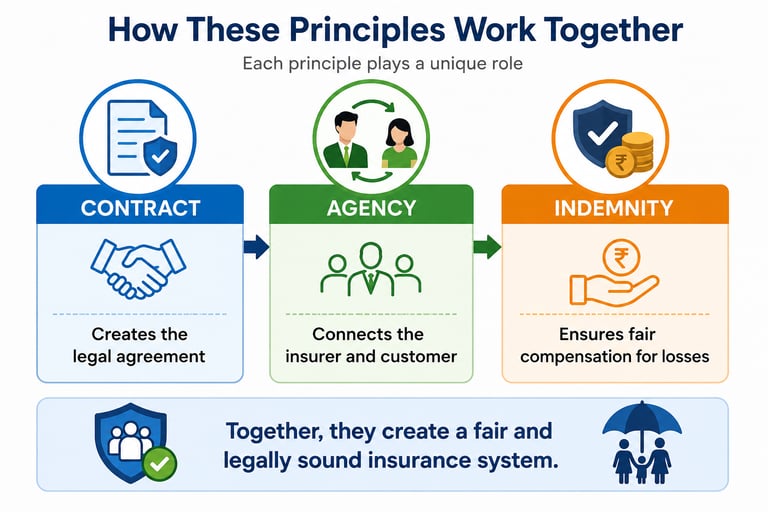
Three important legal concepts every advisor should know are:
Contract
Agency
Indemnity
Understanding these principles helps advisors explain insurance correctly and serve customers with confidence.
🧾 Contract – The Foundation of Insurance
An insurance policy is a legal contract between the insurer and the policyholder.
Under this agreement:
The policyholder agrees to pay the premium.
The insurer agrees to provide financial protection against specified risks.
Both parties must follow the terms and conditions mentioned in the policy document.
Example
A person purchases a health insurance policy and pays the premium regularly.
If the insured person is hospitalized for a covered illness, the insurer pays the claim according to the policy terms.
This obligation exists because a valid contract was created between both parties.
Why It Matters
A contract clearly defines:
Benefits covered
Exclusions
Rights of the policyholder
Responsibilities of the insurer
Understanding the contract helps avoid misunderstandings during claims.
🤝 Agency – Acting on Behalf of the Insurer
Agency refers to a relationship where one person acts on behalf of another.
In insurance, advisors and agents act as representatives of the insurance company.
Their role includes:
Explaining products
Collecting proposal information
Assisting customers
Ensuring accurate disclosure
Customers often rely on advisors to understand complex insurance terms and make informed decisions.
Example
An advisor helps a customer select a suitable life insurance plan and completes the proposal process.
In doing so, the advisor acts as an agent of the insurer.
Why It Matters
A knowledgeable and ethical advisor helps:
Build customer trust
Prevent incorrect policy issuance
Improve customer satisfaction
Reduce disputes and complaints
🛡️ Indemnity – Compensation for Loss
Indemnity is one of the most important principles of general insurance.
It means restoring the insured person to the same financial position they were in before a loss occurred.
Insurance is meant to compensate losses, not create profits.
Example
A car suffers accident damage and the repair cost is ₹30,000.
If the claim is covered, the insurer pays the repair cost according to policy conditions.
The policyholder receives compensation for the loss but does not make a financial gain.
Why It Matters
The principle of indemnity:
Prevents unfair profit from claims
Encourages honest claim reporting
Helps maintain fairness in insurance
Most motor, fire, marine, and property insurance policies operate on this principle.
🔗 How These Principles Work Together
💡 Why Insurance Advisors Should Understand These Concepts
Knowledge of legal principles helps advisors:
✅ Explain policies more effectively
✅ Guide customers with confidence
✅ Improve compliance and professionalism
✅ Reduce policy and claim disputes
✅ Build long-term customer trust
Customers are more likely to trust advisors who understand the fundamentals of insurance.
💬 Advisor Script Suggestion
"When you buy insurance, a legal contract is created between you and the insurer. My role is to guide you through the process, and if a covered loss occurs, the policy helps compensate that loss according to the terms of the contract."
Simple, professional, and easy for customers to understand.
🎯 Key Takeaways
Insurance policies are legal contracts.
Advisors act as agents of the insurer.
Indemnity ensures fair compensation for actual losses.
These principles protect both customers and insurers.
Understanding legal concepts helps advisors provide better service and build trust.
Insurance is not just about selling policies—it is about understanding the legal principles that protect people when they need financial support the most.