💹 The Economic Benefits of Life and Non-Life Insurance
Insurance is often viewed as a financial safety net for individuals and businesses. However, its impact goes far beyond protecting policyholders from losses.
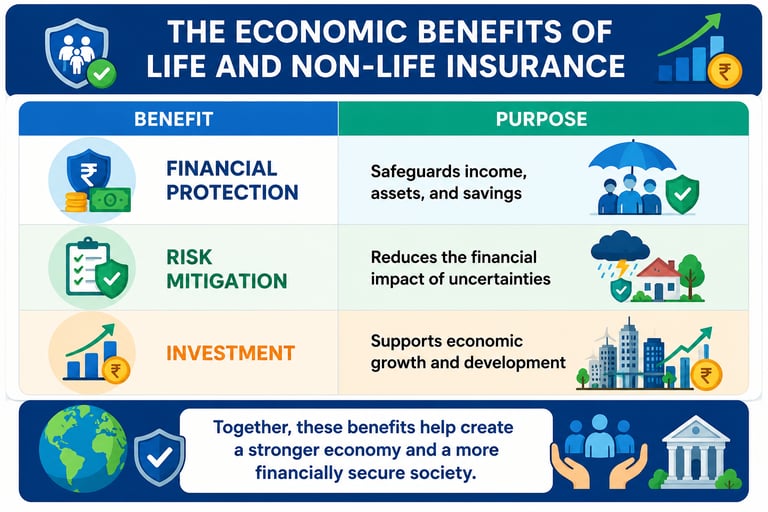
Both life insurance and non-life insurance contribute significantly to economic growth, financial stability, and investment development.
By helping people manage risks and secure their future, insurance plays an important role in strengthening the economy.
Three major economic benefits of insurance are:
Financial Protection
Risk Mitigation
Investment Generation
Let's explore how these benefits support individuals, businesses, and the economy.
🛡️ Financial Protection – Safeguarding Wealth and Income
The primary purpose of insurance is to provide financial protection against unexpected events.
Life insurance protects families against the financial impact of the death of an earning member, while non-life insurance protects assets such as homes, vehicles, businesses, and property.
Example
A family's primary breadwinner passes away unexpectedly.
A life insurance policy can provide financial support to the family, helping them meet daily expenses, education costs, and future financial goals.
Similarly, if a factory is damaged by fire, non-life insurance can help cover repair and replacement costs.
Why It Matters
Financial protection helps:
Preserve savings
Protect family income
Support business continuity
Reduce financial hardship
⚠️ Risk Mitigation – Managing Uncertainty
Insurance helps individuals and businesses manage risks that could otherwise cause significant financial losses.
Instead of bearing the full burden of a loss alone, policyholders share the risk with the insurer.
Example
A business owner purchases fire insurance for a manufacturing unit.
If a fire occurs, the insurance policy helps reduce the financial impact of the loss.
This allows the business to recover more quickly and continue operations.
Why It Matters
Risk mitigation helps:
Encourage entrepreneurship
Promote business confidence
Support economic activity
Reduce uncertainty
When risks are managed effectively, people and businesses are more willing to invest and grow.
📈 Investment – Supporting Economic Growth
Insurance companies collect premiums from millions of policyholders.
A portion of these funds is invested in:
Government securities
Infrastructure projects
Corporate bonds
Financial markets
These investments contribute to economic development and long-term growth.
Example
Life insurance companies invest large amounts of money in infrastructure projects such as roads, railways, and public utilities.
These investments support national development while generating returns.
Why It Matters
Insurance investments help:
Create jobs
Support infrastructure development
Strengthen financial markets
Promote economic growth
🌍 Real-World Example
Consider a small business owner.
Financial Protection
Business insurance protects property and inventory.
Risk Mitigation
Insurance reduces uncertainty from accidents, theft, or natural disasters.
Investment Impact
Premiums paid by policyholders contribute to investments that support economic development.
Together, these benefits extend beyond the individual and positively impact the broader economy.
🔗 How These Benefits Work Together
👨💼 Why Insurance Advisors Should Understand This
Understanding the economic role of insurance helps advisors:
✅ Explain the broader value of insurance
✅ Educate customers effectively
✅ Build trust and confidence
✅ Promote financial awareness
✅ Demonstrate insurance's contribution to economic growth
Insurance is not only about claims—it is also about financial stability and economic progress.
💬 Advisor Script Suggestion
"Insurance protects families and businesses from financial losses, helps manage risks, and contributes to economic growth through long-term investments. It benefits both individuals and society."
Simple and easy to understand. ✅
🎯 Key Takeaways
Life and non-life insurance provide financial protection.
Insurance helps individuals and businesses manage risks.
Insurance companies invest premium funds in the economy.
These investments support infrastructure and economic development.
Insurance promotes financial stability and confidence.
A strong insurance sector contributes to national economic growth.
Insurance is more than a protection product. It is an important economic institution that supports financial security, encourages investment, and contributes to the overall development of society and the economy.